


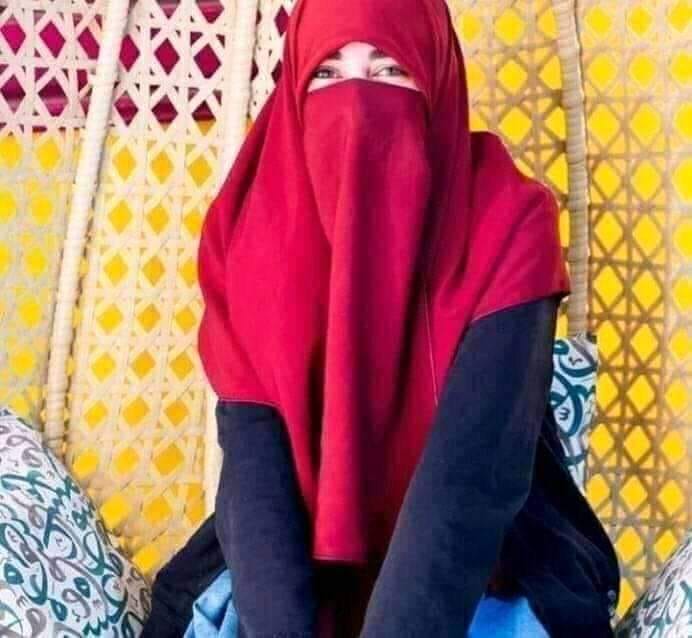
1. Personal information:
a. Birth: Ms. Aya was born on 19 March 1995. She has been arrested three times, at the ages of 18, 25 and 27.
b. Upbringing: She grew up in Alexandria Governorate and graduated from the Institute of Islamic Studies.
c. Occupation: Clothing design and tailoring.
d. Political activity/affiliation: She has not joined any political party or group.
e. In the spotlight: She first came into the spotlight when she was arrested on a street in Alexandria while taking part in the “7 AM march” supporting the legitimacy of former President Mohamed Morsi in late 2013. She was then charged in the case known in the media as the “7 AM girls” case and sentenced to more than 11 years in prison, reduced on appeal to one year, suspended. The attention around her grew after her second arrest in 2020, following a statement about her by Egyptian actress Badreya Tolba, after Aya published a video criticizing how the Egyptian authorities handled the coronavirus outbreak.
Ms. Aya became the talk of political activists and civil society organizations after she was arrested at home for the third time in July 2022 without any clear reason.
2. Previous arrests: Ms. Aya has been arrested three times, as follows:
First: the first arrest
a. Background of the first arrest:
– 31 October 2013, first arrest: She was arrested on the streets of Alexandria together with about 20 women after taking part in a march called the “6 AM march”, which supported the return of former President Mohamed Morsi.
b. Background of the case: Case No. 25790 of 2013 Sidi Gaber Misdemeanors, known in the media as the “7 AM girls” case.
The events of the case began early in the morning of 31 October 2013, when 21 women and girls started the “7 AM” activity with a march supporting former President Mohamed Morsi in the Roshdy area of Alexandria. The police arrested them and added them to the case mentioned above.
c. Charges: She faced several charges, most notably:
– Taking part in an assembly of more than five people.
– Damaging private fixed property.
– Show of force and threatening to use violence.
– Possessing tools used to assault others.
d. Trial and sentences:
– 27 November 2013, first-instance verdict: The Sidi Gaber Misdemeanor Court in Alexandria sentenced her to 11 years and one month in prison and 4 years of surveillance on the charges listed above.
– 7 December 2013, appeal: The Alexandria Court of Appeal reduced the sentence to one year, suspended, and she was released.
Second: the second arrest
a. Background of the second arrest:
– 24 March 2020, second arrest: She was arrested at 2:30 am at her home in the Second Raml area of Alexandria after publishing a video criticizing how the Egyptian authorities handled the coronavirus outbreak. Actress Badreya Tolba commented on the video, condemning what she said and accusing her of being a Brotherhood member. She was forcibly disappeared for about 8 days.
– 1 April 2020, appearance before the Supreme State Security Prosecution: She appeared before the Supreme State Security Prosecution in one of the cases known in the media as the “coronavirus cases”.
b. Background of the case: Case No. 558 of 2020 Supreme State Security Inquiry, one of the cases known in the media as the “coronavirus cases”. Many political activists called it a black hole that swallows opponents, doctors and other groups of Egyptian society, and others described it as a whirlpool of charges without evidence.
The case began after the spread of the coronavirus and came to include everyone who called for the release of political and other prisoners to protect them from the effects of the disease spreading inside the prisons, especially given the overcrowding.
The case included many doctors, lawyers, journalists and activists engaged in public affairs. The best known include lawyer Mohsen El-Bahnasy; activist Noha Kamal Ahmed, daughter of member of parliament Kamal Ahmed; researcher Kholoud Said, head of the translation department at the Bibliotheca Alexandrina; journalist Ahmed Allam; and Atef Hasballah, editor-in-chief of Al-Qarar Al-Dawli newspaper.
c. Charges: She faced several charges, the best known being:
– Joining a terrorist group with knowledge of its aims.
– Misuse of social media.
– Publishing and spreading false statements and news.
d. Trial and sentences:
Ms. Aya remained in pretrial detention without attending hearings because of the coronavirus outbreak at the time.
– 18 December 2020, release with precautionary measures: The Cairo Criminal Court ordered her release with precautionary measures pending investigations in Case No. 558 of 2020 Supreme State Security Inquiry, because of her poor health at the time. Political activist Solafa Magdy described meeting Ms. Aya Kamal in the defendants’ cage as follows:
“At one of the detention renewal hearings I met Aya when she was sick. She went in to the judge unable to breathe, her face blue and about to vomit. The judge panicked and threw her out, saying: ‘Release, release her, out, out, we don’t need coronavirus, I’m an old man and I can’t handle getting sick.'”
3. Timeline since the latest arrest
a. Background of the arrest:
– 2 July 2022, arrest: Egyptian security forces arrested Ms. Aya at her home in Alexandria for the third time, without giving any clear reason.
– 5 July 2022, appearance before the Supreme State Security Prosecution: She was forcibly disappeared until she appeared before the Supreme State Security Prosecution about 3 days later, once again accused of joining a terrorist group and spreading false news, and was then added to one of the cases known in the media as the “publishing cases”.
b. Background of the case:
Case No. 93 of 2022 Supreme State Security Inquiry is one of the group of cases known in the media as the “publishing cases”. It is a relatively new case that includes activists from various ideologies, chief among them Popular Alliance member Wessam Salah. The main charge they all share is spreading false news.
c. Charges: The prosecution brought against her the same charges she faced after her arrest in 2020, during the coronavirus outbreak:
– Joining a terrorist group.
– Spreading false news and statements inside and outside the country.
– Misuse of social media.
d. Trial and sentences:
Ms. Aya is still in pretrial detention, renewed according to the legally set periods, and her suffering in prison continues.
4. Detention conditions
a. Places of detention: She spent her first detention in 2013 in Damanhour General Women’s Prison. Her second detention in 2020 and the current one since 2022 have been in Al-Qanater Women’s Prison.
b. Violations: She was subjected to a number of violations, as follows:
– Enforced disappearance more than once: about 6 days after her 2020 arrest, and about 3 days after her third arrest in 2022.
– Re-arrest on the same charges: she was released in late 2020 in a case whose best-known charges were joining a terrorist group and spreading false news, then re-arrested in 2022 on the same charges.
– Medical neglect in prison: she suffers from asthma and chronic chest allergy, amid medical neglect of her condition, delays in bringing in the medicine she needs, and at times a ban on it.
– Ban on visits and contact: she was not allowed normal contact with her lawyer and family during the coronavirus outbreak.
– Severe overcrowding: she was previously held with about 100 prisoners in the small reception cell at Al-Qanater Women’s Prison.
c. Detention conditions inside prison:
From the start she suffered medical neglect in prison and delays in bringing in the medicine needed to keep her health stable, and at other times a ban on it, as she has asthma and chronic chest allergy. She was held at Al-Qanater Women’s Prison in the small reception cell with about 100 other prisoners, and she was only allowed to use the toilet after getting permission from the inmate on duty in charge of the cell. She was completely banned from visits during the coronavirus outbreak, and when visits were allowed, the National Security permit only allowed visits at long intervals of up to a full month, in violation of the Prisons Regulation Law and its bylaws, which allow pretrial detainees a visit every week.