

1. Personal information:
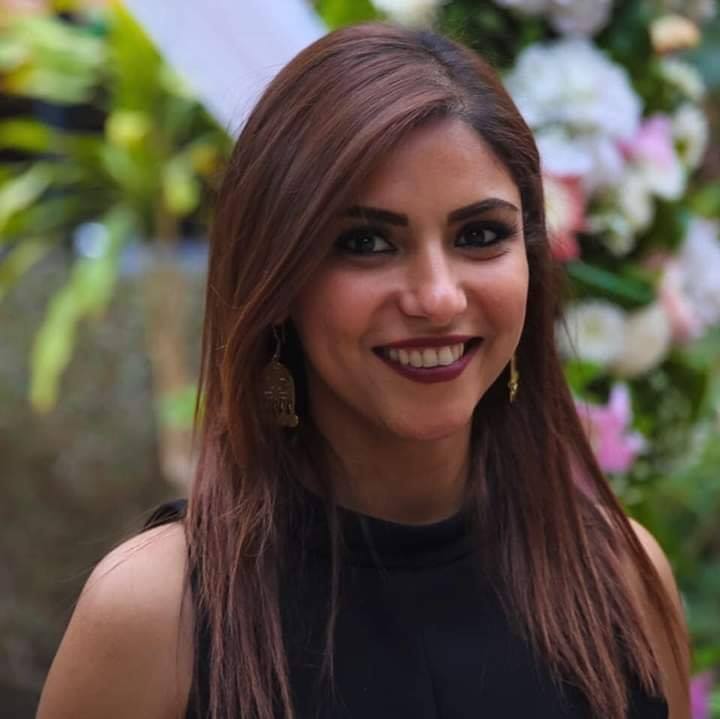
a. Birth: Ms. Solafa was born on 31 January 1987. She was arrested at the age of 32.
b. Upbringing: She grew up in Jordan and then moved to Egypt, to Cairo. She graduated from the Faculty of Law at Ain Shams University with a bachelor’s degree in 2009.
c. Occupation: Journalist. She has worked for many news websites and agencies, including TRT World, BBC Egypt, Mada Masr and others.
d. Political activity/affiliation: Human rights defender. She has not belonged to any political party or group.
e. In the spotlight: Ms. Solafa came into the spotlight through her work as an Egyptian journalist, and attention on her grew when she was abducted with her husband from a café in Dokki on 26 November 2019 and both were added to the case known in the media as the “Opposition trap”.
f. Additional information: She contributed to video reports published on Egyptian and international news platforms, including Mada Masr and Deutsche Welle (DW). Ms. Solafa also took part in the UN’s Reham Al-Farra Memorial Journalism Fellowship in September 2019, and the Washington Post included her in an advertising campaign supporting journalists detained around the world.
2. Previous arrests: Ms. Solafa was not arrested in any other case.
3. Details of the latest arrest and detention conditions:
a. Background of the arrest: Because of her work as a freelance journalist, her defense of human rights, women and minorities over ten years, and the time and effort she gave to journalism and human rights work in a country “as politically and socially closed as Egypt”, as she put it in a letter she published after leaving prison, she had to pay the price for her journalistic and human rights struggle.
As for the details of her arrest, she was abducted on 26 November 2019 from a café in Dokki, Giza, together with her husband and their friend. She was interrogated by National Security and appeared the following afternoon before the Supreme State Security Prosecution, which ordered her held in pretrial detention pending investigations, and she was then transferred to Al-Qanater Women’s Prison.
b. Background of the case: Ms. Solafa was added to Case No. 488 of 2019 Supreme State Security Inquiry and faced two charges: “joining a terrorist group” and “spreading false news”.
The case goes back to the events of March 2019, when TV presenter Moataz Matar called on citizens to make collective noise (“whistling”) at a set time as a form of peaceful protest, under the slogan “Don’t worry, you’re not alone”, after the Ramses (Masr) Station train crash that killed 22 people.
A number of people who took part in the “whistling” were arrested and added to Case 488. The number of people added to it kept growing until it became a black hole swallowing many people without warning, a “trap for hunting opponents”: journalists, human rights defenders, politicians and trade unionists facing charges with no evidence or facts, all under the sponsorship of “National Security”. Journalist Solafa Magdy and her husband, photojournalist Hossam El-Sayyad, were added to it, along with human rights lawyer Ms. Mahienour El-Masry, journalist and former head of the Constitution Party Mr. Khaled Dawoud, journalist Esraa Abdel Fattah, lawyer Amr Imam and others.
c. Charges: Ms. Solafa appeared before the Supreme State Security Prosecution charged with:
– Taking part with a terrorist group in achieving its aims.
– Receiving funding for terrorist purposes.
– Taking part in a criminal agreement aimed at committing a terrorist crime.
– Assembly, and using private accounts on the internet to commit a crime punishable by law with the aim of disturbing public order.
d. Places of detention: During her disappearance Ms. Solafa was first held at Dokki Police Station, then at the National Security headquarters in Abbasiya, and finally she was moved to Al-Qanater Women’s Prison, where she spent her pretrial detention.
e. Trial: Ms. Solafa remained in pretrial detention in the case mentioned above. The case had not been referred to the competent court when her release was ordered, and it has not been referred to this day.
f. Release: Ms. Solafa was released together with her husband on 14 April 2021 pending the case.
Regarding her release, journalists and media figures suggested that the release of their colleagues was linked to the syndicate elections held earlier that year, in which Diaa Rashwan won the post of head of the syndicate, implying support from the security services for Rashwan, who is close to the regime. That does not negate the positive role played by international pressure for her release, whether from international organizations such as Reporters Without Borders and Amnesty International or from governments such as the US government, as well as the solidarity shown by her fellow journalists inside and outside Egypt.
g. Violations: Ms. Solafa was subjected to a number of violations, such as:
– Seizure of her car, her phones and all her personal belongings.
– Harsh treatment, beating and insults during her interrogation at National Security headquarters.
– Being banned from visits and other forms of contact for months, starting with the coronavirus crisis in 2020.
– Being subjected to a forced vaginal examination of the uterus, which caused severe bleeding that lasted for several months.
– Strip searches by women guards on the direct orders of the prison’s head of investigations, when she first entered prison and before going to or after returning from interrogation sessions.
– Being abducted a second time from the prison and offered release in exchange for becoming an informant. She was then interrogated unlawfully for 6 hours while handcuffed, blindfolded and standing, during which she was insulted, harassed, threatened and physically abused.
h. Sentence: The court has not issued any sentence in this case, and it has not yet been referred.
i. Living conditions in prison:
Ms. Solafa went through poor detention conditions marked by health problems caused by the forced vaginal examination of her uterus, which led to severe bleeding that lasted for several months, as she had undergone surgery to remove uterine tumors shortly before entering prison. She was also banned from visits and other forms of contact for months, starting with the coronavirus crisis and lasting nearly a full year. In addition, she was strip searched by women guards on the direct orders of the prison’s head of investigations before going to or after returning from interrogation sessions.
4. Follow-up:
a. Work and activity: Ms. Solafa currently continues her work as an independent journalist and human rights defender. She hosts the podcast “Podcast 11” and often launches media campaigns calling for the release of men and women imprisoned in political cases in Egyptian prisons, whose only crime is expressing their opinions.
b. Place of residence: Ms. Solafa moved to Paris, where she continues her journalistic and human rights work far from her homeland, Egypt.
c. New awards:
– While she was in prison, Ms. Solafa, along with three other women journalists from China, Finland and Syria, received the prestigious 2020 Courage in Journalism Award from the International Women’s Media Foundation (IWMF).
– After her release, in December 2021, the Mayor of Paris granted her honorary citizenship of Paris in recognition of her.
d. Personal life: Ms. Solafa currently lives with her husband, photojournalist Mr. Hossam El-Sayyad, and her son Khaled, from whom she draws her strength in her struggle.