


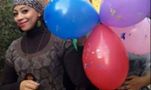
1. Personal information:
a. Birth: Ms. Aliaa was born on 21 April 1985. She was arrested at the age of 29.
b. Upbringing: Ms. Aliaa grew up in the Helwan area of Cairo and holds a bachelor’s degree in tourism.
c. Occupation: Photojournalist for the Rassd news network. She covered protests (she also filmed the 30 June 2013 protests), and people close to her always say she loves her profession.
d. Political activity/affiliation: She has not joined any political party or group.
e. In the spotlight: Aliaa came into the spotlight when she was arrested on 3 September 2014, becoming the only woman charged in the “Helwan Brigades” case. She also suffered poor health in detention, which led organizations to call for intervention to get her out of prison.
2. Previous arrests: Ms. Aliaa was not arrested in any other case, but she was arrested twice in the same “Helwan Brigades” case.
The first time: from 3 September 2014 until her release on 28 March 2016.
The second time: from 23 October 2017 until now.
3. Previous and current detention and details of the arrest:
a. Background of the arrest: Ms. Aliaa filmed a video in the Helwan area of Cairo showing members of the “Helwan Brigades”. After filming it, she judged that filming and publishing the video might go beyond what is acceptable in journalistic work, so she reconsidered and decided not to publish it. However, another video of the same incident was published by other people and then by Al-Masry Al-Youm newspaper, and she was arrested on 3 September 2014 over that published video. She explained more than once, before the Supreme State Security Prosecution and before the competent court, that she had nothing to do with that video.
As for the details of her arrest, security forces stormed Ms. Aliaa’s place of residence (her aunt’s home). Since she was not there at the time, they arrested her aunt and her aunt’s son as a way to pressure her, and Ms. Aliaa did hand herself in to the police station.
b. Background of the case: Ms. Aliaa was added to Case No. 4459 of 2015 Helwan Felonies, registered as No. 451 of 2014 Supreme State Security Inquiry, known in the media as the “Helwan Brigades” case.
The “Helwan Brigades” case began on 15 August 2014, as protests grew after the killing of a protester at the time (Alaa El-Kammash), when a video appeared showing a group of people calling themselves the “Helwan Brigades”. They were carrying weapons and threatened violence in protest against killing and torture by the security forces, the army and the Ministry of Interior, especially during the Rabaa, Nahda and Manassa events, which, in their words, went as far as killing and the rape of women.
On 27 August 2014, the Ministry of Interior announced that the “Helwan Brigades” plan was led by members of the Muslim Brotherhood. Following that, the police arrested 214 defendants (men and children) and one woman, Ms. Aliaa.
On 19 February 2015, the late Public Prosecutor Counselor Hisham Barakat referred 215 defendants to urgent criminal trial. It should be noted that the number of defendants in the case is far greater than the number of people who appeared in the video, which did not exceed a few dozen.
c. Charges: Ms. Aliaa appeared before the Supreme State Security Prosecution charged with joining a terrorist group and promoting its aims. The charges against the other men and children ranged between that charge, taking part in an assembly aimed at sabotage and the use of force, and attempting to kill police officers.
d. Places of detention: During her disappearance Ms. Aliaa was held at National Security premises. She was also held for several months at Helwan Police Station and was finally moved to Al-Qanater Women’s Prison, where she is serving her sentence and remains to this day.
e. Trial: The “Helwan Brigades” case is one of the longest-running cases in the courts. The defendants remained on trial for nearly eight years: the events of the case and the arrests began in 2014, the case was referred to the competent criminal court on 19 February 2015, and its first hearing was set for 30 August 2015. The case stayed before the court until the sentences were issued in 2022 by the First Terrorism Circuit, presided over by Judge Mohamed Sherine Fahmy.
The defendants are usually kept inside a glass cage throughout the trial, so they cannot communicate with their defense lawyers or with the judge, or even exercise their right to discuss and defend themselves.
f. Release: Ms. Aliaa was released in 2016 because she was the only woman among the defendants. Shortly afterwards, on 23 October 2017, an order was issued to hold her, and she was arrested less than a year after her release from inside the courtroom.
g. Violations: Ms. Aliaa was subjected to a number of violations, such as:
– The arrest of her aunt and her aunt’s son to force her to hand herself in to the police.
– Being interrogated without a lawyer present.
– Being taken to National Security headquarters after her first arrest and pressured to record false confessions.
– Being banned from visits.
– Obstruction in carrying out requests made through the competent court. Even when the court granted requests, they were usually not carried out, such as the delays in implementing decisions about her medical treatment.
– Being placed in a glass cage during hearings, so she cannot communicate with her defense lawyer or with the judge, or even exercise her right to discuss and defend herself.
h. Sentence and life afterwards: The Cairo Criminal Court, First Terrorism Circuit, sentenced Ms. Aliaa to fifteen years of aggravated imprisonment on the charge of joining a terrorist group and promoting its aims. Ms. Aliaa is now held in Al-Qanater Prison.
i. Living conditions in prison:
Ms. Aliaa has gone through poor detention conditions marked by health problems. First, tumors appeared in her uterus, and after severe suffering they were removed. Then another health problem appeared, a fistula in her back. Although she has already had a fistula operation, she needs to repeat it with better techniques because of the limited capacity of the prison hospital, and she suffers from continuous bleeding.